|
API
plans restoration and
reforestation program
for Valle de Las Garzas
Lagoon
The Manzanillo Port
Authority (API), is
developing one of the
most important
"compensation" projects
of the port, the
restoration and
reforestation of the
Valle de las Garzas
Lagoon. Plans are
to create 6 new islands,
which will then be
planted with white
mangrove saplings.
In 2004 API removed more
than 26 hectares of
mangroves as part of the
plan to enlarge the
port, and to compensate
for this loss of
habitat, API agreed to
develop and improve the
lagoon and turn it into
a protected estuary.
Please click on
photos to enlarge |
 |
The project began in
December 2011, and the
first phase of the plan
is expected to be
completed by the end of
June 2012. Based
on previous studies, API
identified damaging
effects in the lagoon,
such as anthropogenic
pollution (pollution
caused or produced by
humans), bad
oxygenation, reduced
water flow, destruction
of the original
vegetation, and high
levels of organic
materials.
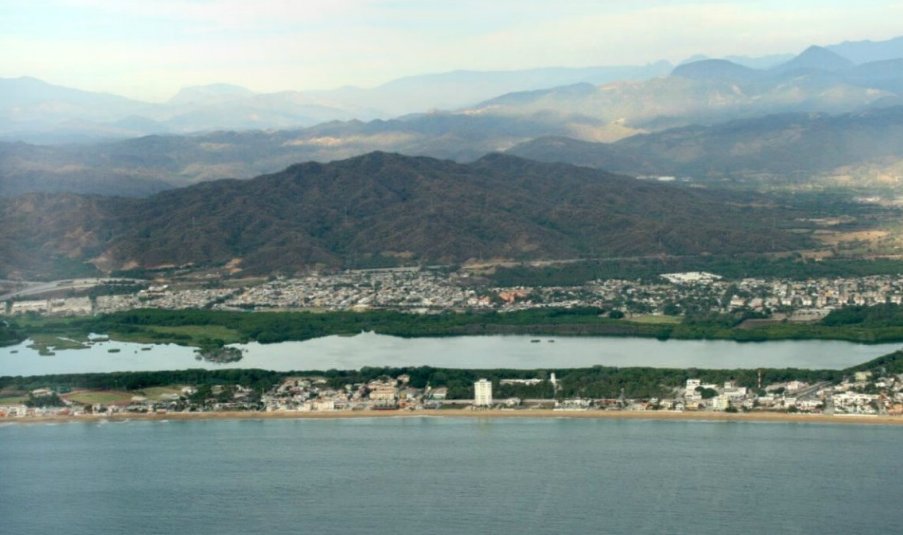
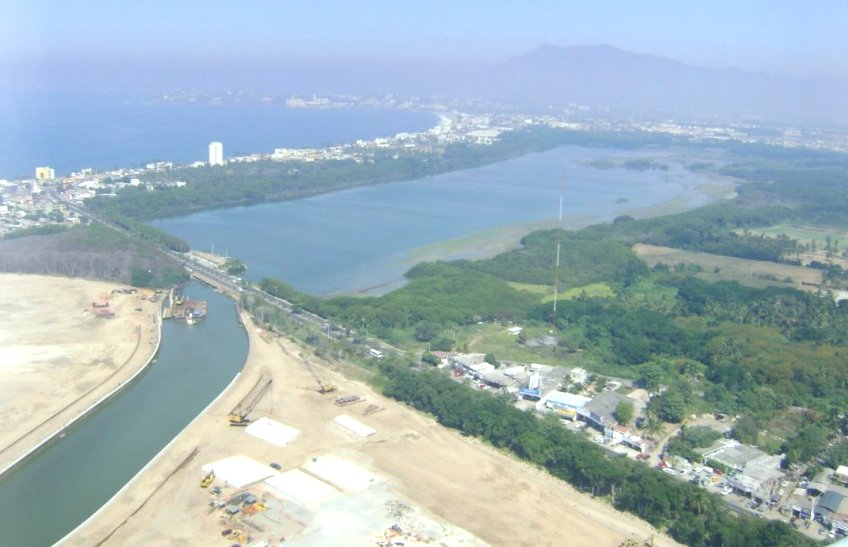
(Photos: lagoon
before the start of the
project, left; lagoon
where it meets the
man-made channel leading
to the sea, right)
|
 |
 |
To reduce the loss to
the ecosystem, and to
generate social and
ecological benefits, the
restoration program
began with the dredging
of the lagoon, and
designing the islands,
which will eventually
become wildlife
sanctuaries.
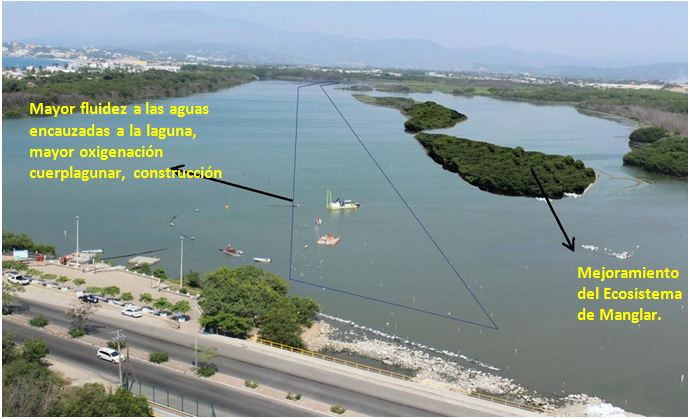
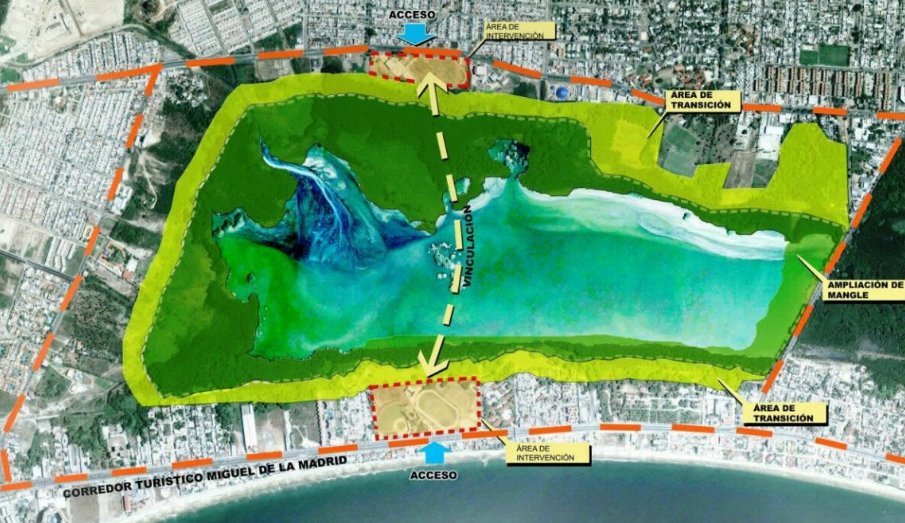
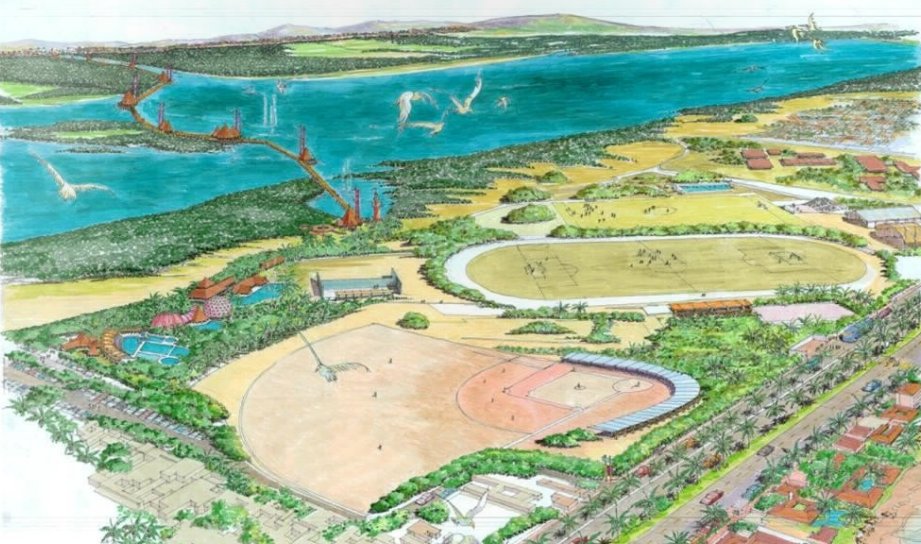
(Photos: blue polygon
is projected deepened
channel & new chain of 6
islands depicted
in green with arrow,
left; artist's sketch of
lagoon with pedestrian
walkway shown in white
dashed line, right)
|
 |
 |
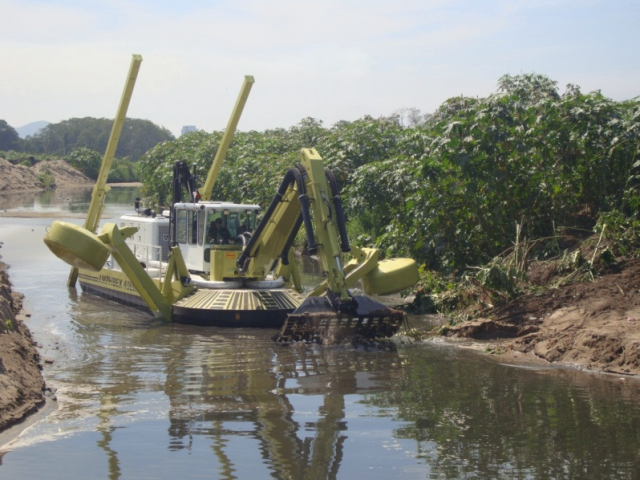
The
port authority contracted with a
Mexican company, Dragamex, S.A.
de C.V. out of Mexico City.
Dragamex is a business with
specialized equipment that will
dredge a deep channel which will
allow an increase in fresh sea
water flow.
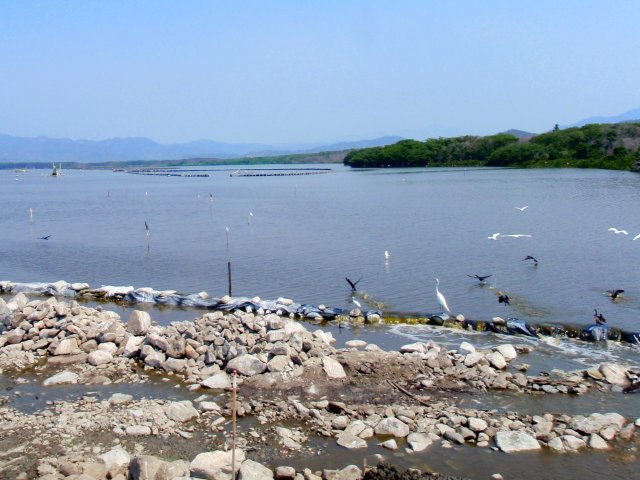
(Photos: the Amphibex dredger
at work, left; area where lagoon
meets the channel to the sea,
soon to be deepened to ensure
fresh exchannge of water from
the sea, right)
|
 |
 |
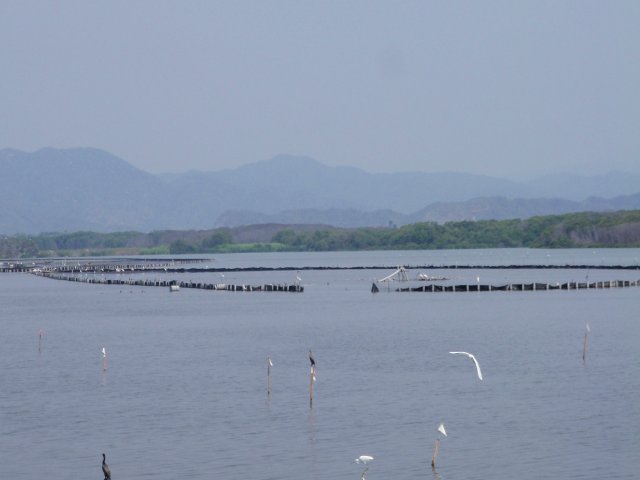
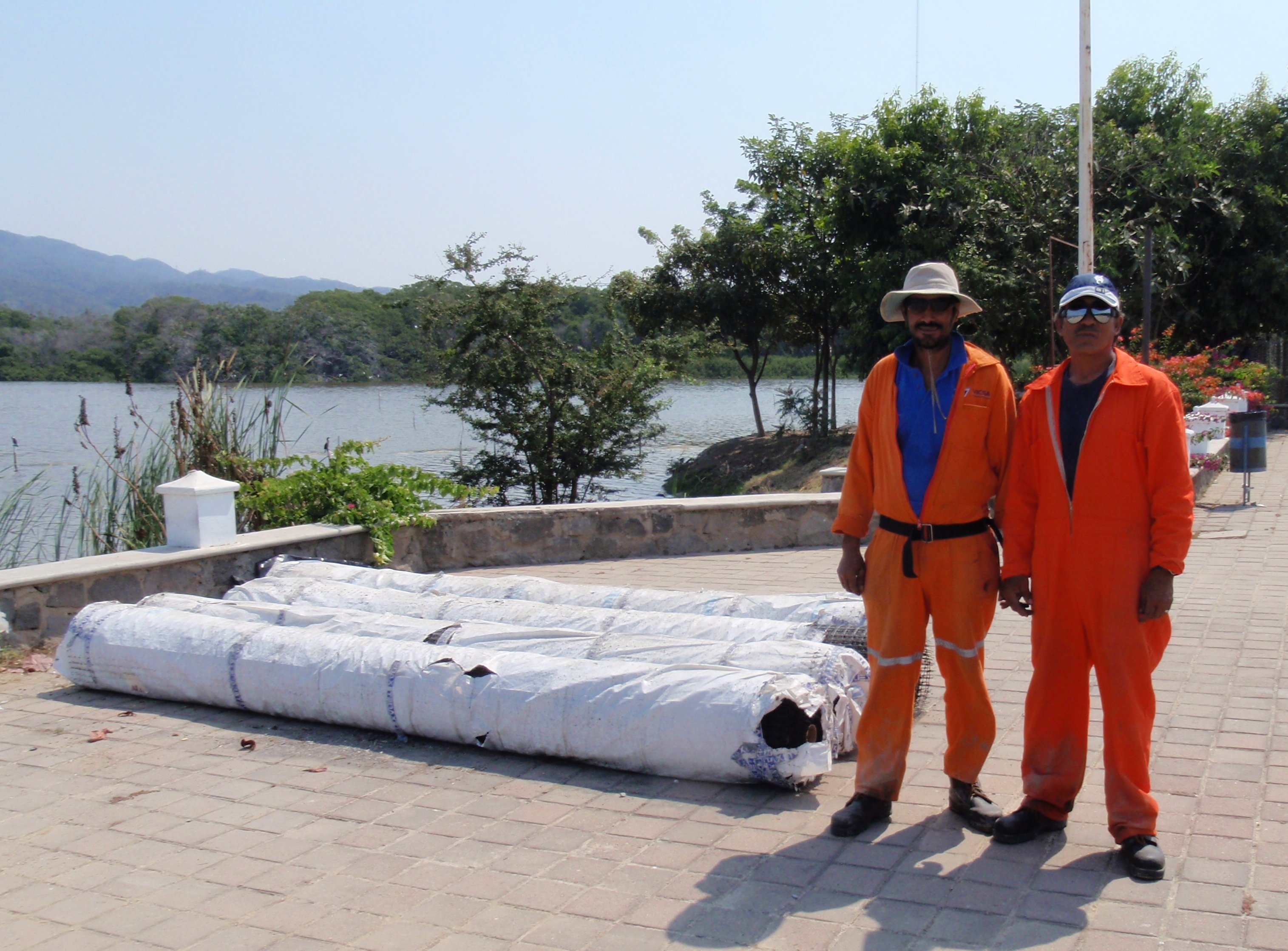
The
project began by staking out the
areas that will become islands,
and staking the area to be
dredged to form a deep channel
leading to the sea. The polygon
island outlines will then be
circled with a mesh-like PVC
screen reinforced with
galvanized steel wire, securely
attached to the stakes.
(Photos: stakes & PVC screen
encircling the islands-to-be,
left; 2 workers get ready to
unroll the mesh-like screen to
begin building the islands,
right)
|
 |
 |
Large, heavy duty bags, also
made of PVC will be filled with
the silt and mud dredged from
the channel, and will become an
integral part of each island.
The work will be done by the
Amphibex dredger, a 22-ton
amphibious general purpose
excavator made in Quebec, Canada
by Normrock Industries.
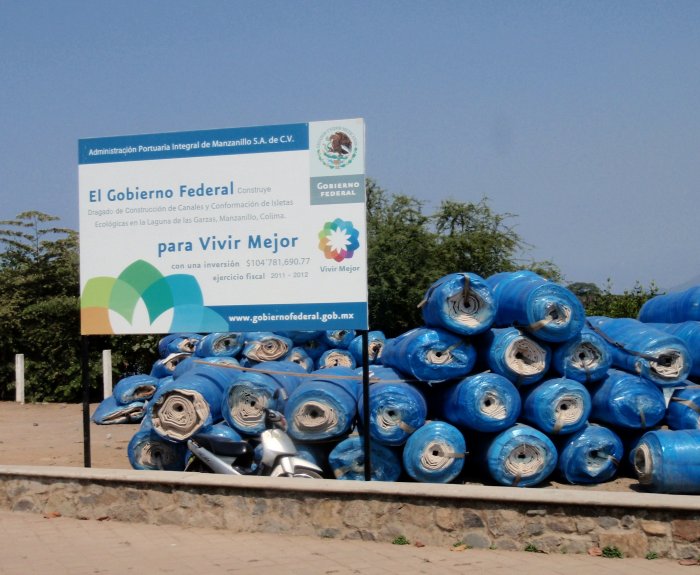
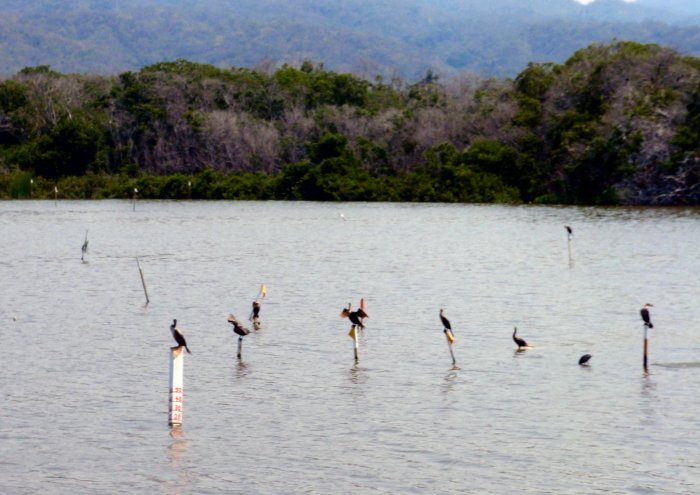
(Photos: a sign installed by
the federal government tells
about the project and states
that 104,781,690.77 billion
pesos is the cost of the
restoration; behind the sign is
the shipment of large bags ready
to fill with silt and dirt to
create the islands, left; birds
enjoy their new perches--stakes
and channel markers, right)
|
 |
 |
Once
the islands are complete, they
will be reforested with the
mangrove saplings and other
types of plants. All in all,
upon completion, 10 hectares of
mangroves will be restored along
the shore line, 7 hectares will
be planted on the 6 islands, and
another 8.06 hectares of the
wetlands areas will be improved
by improving water circulation.
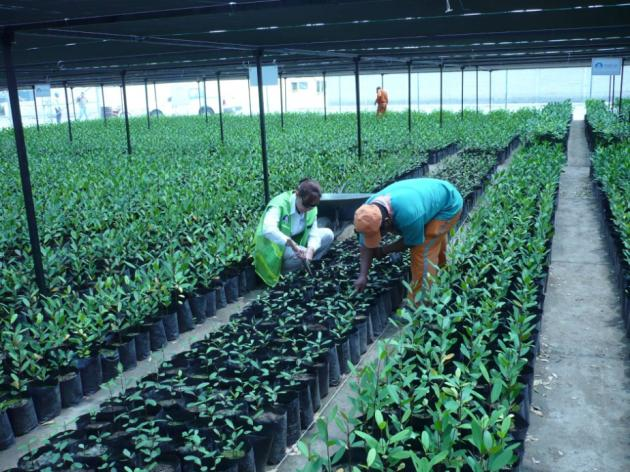
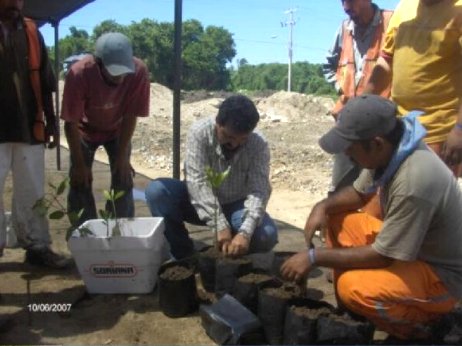
Since 2009 API has reforested
more than 20,985 mangroves on
5.2 hectares around the port,
and has created a nursery to
grow the trees until they are
planted on the islands.
(Photos: nursery, left; planting
the saplings, right)
|
 |
Some of the benefits of this project are:
-
Reduction of risk of flooding.
-
Creation of new spaces to develop educational and recreational activities, and for scientific investigation.
-
Improvements on the water quality by having the lagoon connect directly to the sea.
-
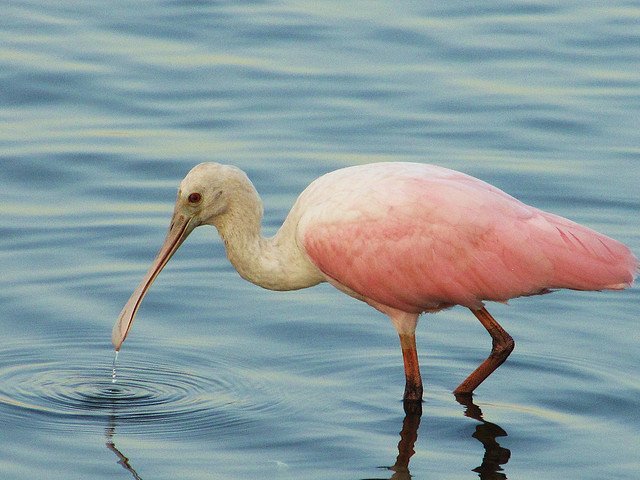
Space conservation to protect flora and fauna, such as the roseate spoonbill, photo right.
-
Increase the mangrove area to improve the eco-system, provide a natural habitat for nesting water birds and other wildlife, as well as to protect against tidal surges in times of tropical storms.
-
Improve water circulation promoting a better eco-system.
|
|
|
|
|
|
|
|
|
|