not these guys.
The ancient art
of making bricks
in Manzanillo
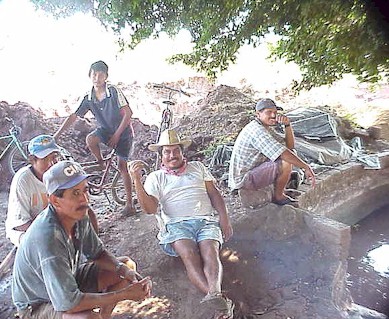
Photo left: The brickmakers enjoy a break under a shade tree on Saturday afternoon at 2 p.m. closing time.
|
|
One brick short of a full
load... not these guys. The ancient art Photo left: The brickmakers enjoy a break under a shade tree on Saturday afternoon at 2 p.m. closing time. |
|
by Susan Dearing It's a hard job, but somebody's got to do it. And the men (and boys) who make bricks, work all day, 6 days a week in the hot sun. The process starts in an area where there is a particular type of clay. (Remember the kind you made mud pies out of when you were a kid?) This clay comes in all colors, and its color determines the color of the brick. When the clay supply from the mountain runs low, rather than move the brick-making operation, the workers will have truckloads of the clay brought in. Almost all construction in Manzanillo is made with these hand-made bricks. |
 |
 |
The
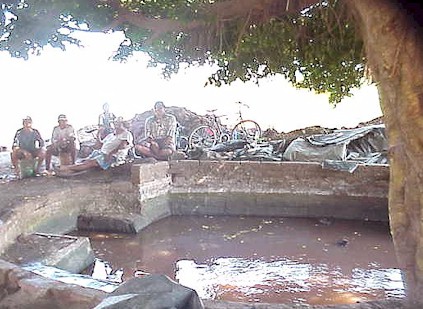
dry, soil-like clay is first mixed with water from a well, which is on the
site. It is hauled, a wheelbarrow at a time, to a flat area where the
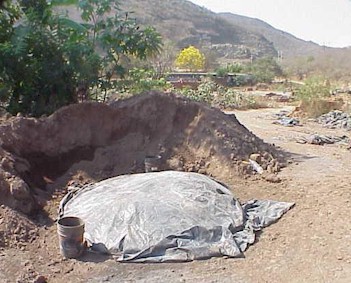
bricks will be formed. The unused mixture remains under a plastic tarp to
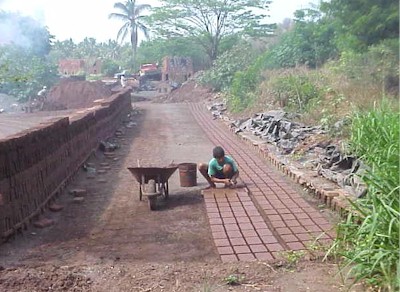
keep it from drying out. The soft mixture is scooped into a mold, and the excess is skimmed off the top by hand. Often the brick maker will finish off each mold with a special flourish--his "signature," or handprint. They work fast; they're paid by the bricks they produce. An average worker can make 400-500 bricks per day. Once the mold is removed (and there are various molds for different types and sizes of bricks), the brick is allowed to sun dry. Once the bricks have begun to air-dry on the flat area, they will be turned repeatedly so that all sides can dry equally. |
| They are then stacked in
rows, leaving spaces so that they can continue to air-dry from all sides.
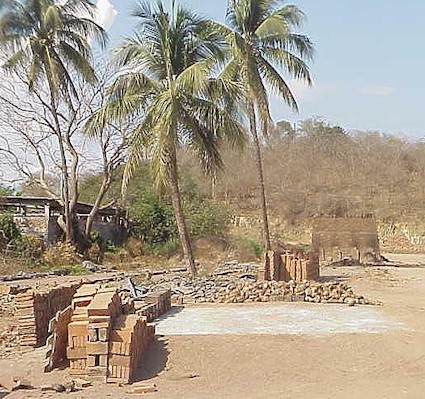
The bricks will be restacked repeatedly so that they dry evenly. It is then time for curing the bricks. It is amazing to note that this is a process that uses everything natural from the land. Other than the man-made metal mold, and a wheelbarrow, there is nothing used in the process of brick making that is artificial. A space is cleared to build an oven, made from the bricks themselves. bricks are stacked with spaces in between them, with several hollow shafts that will be later filled with coconut shells and scrap wood. |
|
 |
Dry coconut shells burn particularly hot and fast,
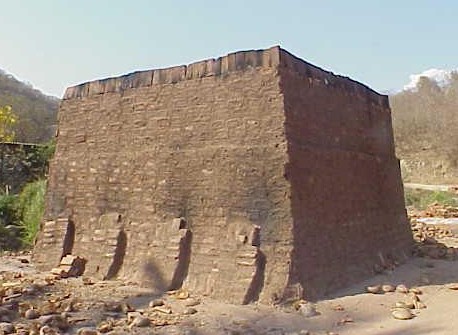
speeding up the firing process. Once the bricks are stacked to make the oven, the exterior is sealed with a layer of clay mud. Then the fire is lit and the openings are closed off with more bricks. The bricks are baked until the fires go out, and the oven is allowed to cool. Now it is ready to be dismantled, and the bricks will go on to their (or your) new home. This method of making bricks dates back more than 5,000 years. To observe for yourself how bricks are made, take the old road to Colima, and about 30 miles from Manzanillo you will come to the little town of Armeria. On the outskirts of town, you'll find numerous brick-making operations. Anyone can stop, watch and take photos. |
| Photo above: Space cleared to build oven Photo right: A finished oven, sealed with adobe, for firing the bricks it is made out of.
For other places to visit while in Manzanillo, check out Susan Dearing's 150-page tourist guidebook: www.gomanzanillo.com/guidebook/index.htm For a tour that includes the brickmaking factory, go to www.manzanilloadventures.com and check out the "Turtle & Iguana Eco-Experience." |
 |